The Seed Bank Simulator
The Ask
Conceptualise and design an interactive digital technology that will enhance the experience that visitors can have of a specific part of a museum’s collection.
The Seed Bank Simulator was a project I worked on with 3 other HCID Masters students at City, University of London. We focused on the seed bank artifacts in the Wellcome Collection's permanent collection, Being Human.
Our technology was designed to help visitors form a more personal, health-focused connection to the otherwise non-interactable seed bank artifacts. Visitors are encouraged to learn more about the plants and why preserving them is important for human health.
HIGH LEVEL TIMELINE
8 weeks: user research, ideation, conceptual design, detailed design, evaluation
MAKE OF THE TEAM
4 HCID Master's students
KEY DELIVERABLES
Empathy map, personas, journey map, wireframes, clickable prototype
Discovery
Initial discovery research to uncover user behaviors in the exhibit
-
Conducted naturalistic observations and interviews at the museum
-
Analyzed data through an empathy mapping workshop
-
Synthesized results into user personas and a journey map


Define & Ideate
I conducted a series of brainstorming sessions to define the problem and generate potential solutions
-
Collectively created a variety of POV statements based on discovery research findings
-
Determined that museumgoers need to feel personally connected to the climate change exhibit to understand how it fits in to the collection and gain meaning from the pieces
-
Generated a variety of low-fi wireframes to brainstorm interface functionality and potential future user journeys
Sketched wireframe to show basic purpose and functionality of the proposed seed bank program


Iteratively progress from low-fidelity...

...to mid-fidelity wireframes


Measuring Future Impact
To understand the real-world success of the Seed Bank Simulator, I would propose the following mixed-method evaluation plan:
Engagement
-
Time-on-task: How long do users spend interacting with the simulator?
-
Interaction logs: Number of taps, scrolls, and zooms per session
User Experience
-
Visitor Surveys: Short post-interaction surveys with Likert-scale and open-ended questions on usability, clarity, and engagement.
-
Staff Observations: Collect anecdotal feedback from museum staff on visitor behavior changes near the simulator.
Lessons Learned
Through careful observation, empathetic analysis, and user-centered iteration, we designed a solution that transformed a passive artefact into an interactive and educational journey.
-
Users found it “easy to use” and “fun to learn from”
-
Clear plant imagery and tap-based gestures were intuitive
Usability issues:
-
Lack of feedback around selected plant parts caused confusion
-
Over-reliance on users' memory when exploring multiple plant sections
-
Seed imagery on the home screen caused mild confusion without the physical context
Improvements for next iteration:
-
Number plant sections for better orientation
-
Add glow animations to active elements
-
Include accessibility toggle for screen readers or audio descriptions
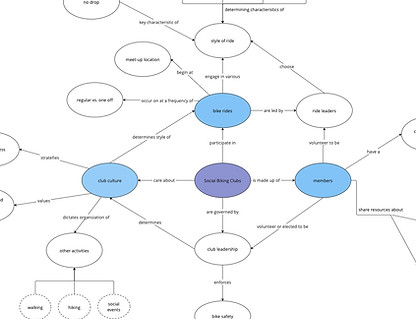
information architecture | audience research | wire framing
Translated interviews with real cyclists into a site architecture that makes finding and choosing the right biking group effortless